
Diegetic Menus in Pokémon
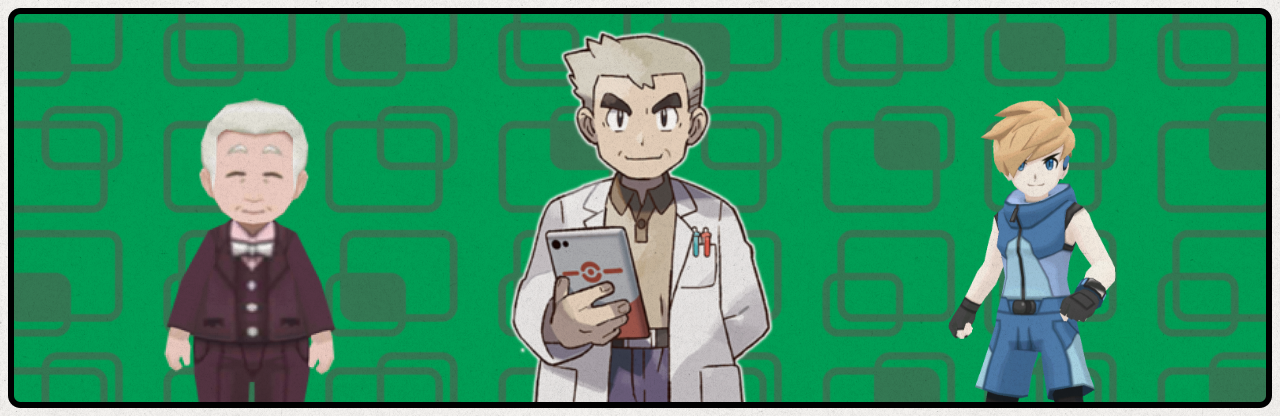
Like most RPGs, Pokémon has a lot of menus. The funny thing is, there could be a lot more. Of course the core menus giving you information about your team’s status, your items, and your map are all readily available by pressing Start/Options. But, the menus for more niche things, like a Pokémon’s effort values, are cleverly hidden inside of the game’s world. They’re diegetic menus.
“Diegetic” means occurring within the context of the story and able to be heard or interacted with by the characters. For example, if a character in a movie is listening to a song on the radio, it’s diegetic music. If the music is playing over a fight scene for the benefit of the audience only, it’s non-diegetic music.
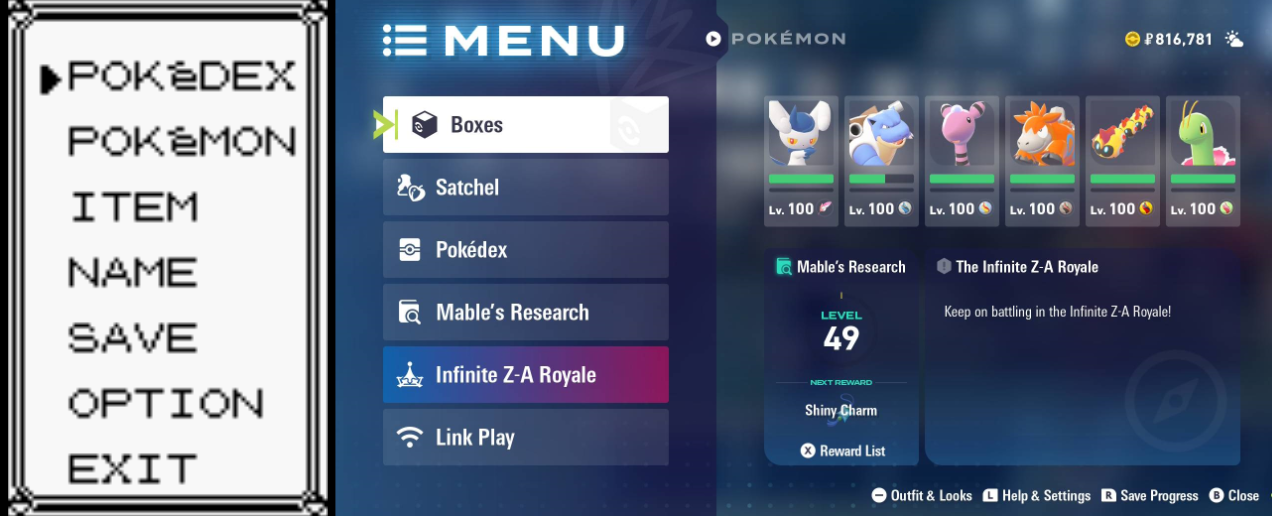
Non-diegetic menus from Pokémon games.
Likewise, a diegetic menu in a videogame is something that the characters can interact with in the fiction of the game. For example, a shop’s buy and sell menu. In games with money there will be shops, and those shops will have simple menus for buying and selling items. This isn’t part of your core menus, for player use only. Your character is going to the shop and spending their money. It exists in the world.
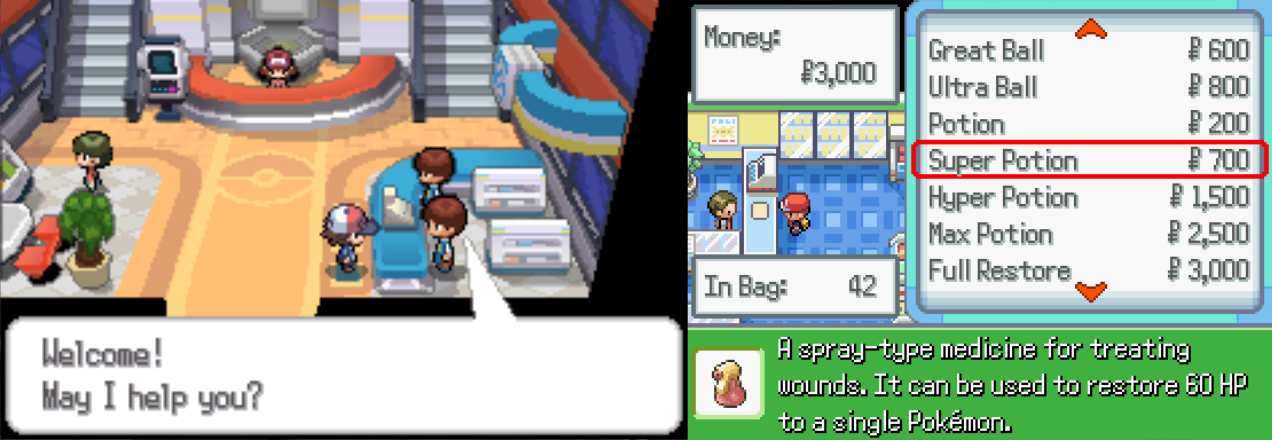
Shops from Pokémon games.
So why does Pokémon, and so many other games, use diegetic menus? Why not have them all available at the press of a button?
World Building
The primary reason you’d want to use something like a diegetic menu is world building. Your inventory feels like more of a part of the real world if you have to reach in your backpack. Talking to an NPC to access a menu feels like talking to an NPC in the world in order to do something.
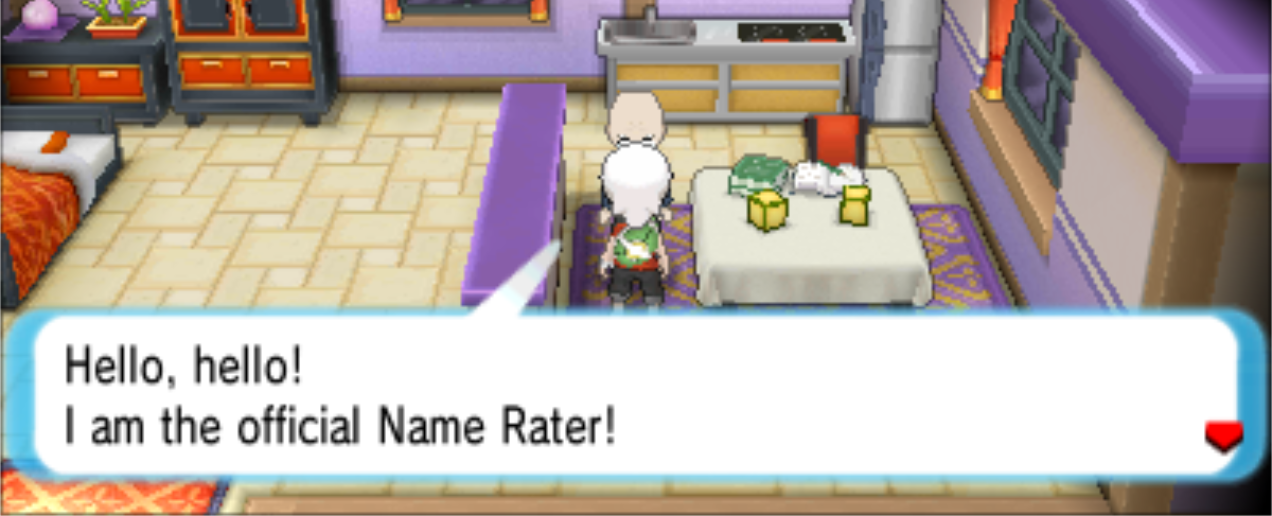
The official Name Rater.
For example, in Pokémon you can name your new Pokémon the moment you catch it, but if you want to change the name you have to go to a specific town and visit an NPC known as the “Name Rater” and change it there. The effect is that changing a Pokémon’s name feels like an in-world decision, and a major one at that. You have to purposefully decide you want to change the name, find or travel to the Name Rater, and then confirm the new name. Yes, this would all be easier and faster through a dedicated menu, but the effort is part of the point.
Clear Up Clutter
Diegetic menus can help to clean up clutter. There’s a surprising amount of information that every Pokémon tracks. There’s the surface level information required to play the game, like hit points, but also includes more interesting things like memories of past playthroughs, challenges each Pokémon has helped you to complete, and IV’s or individual values - a hidden genetic value that affects a Pokémon’s core stats. I could go on about the other information stored in Pokémon data, but I’m a huge Pokémon nerd and not everyone is. In fact, most people don’t know any of this information, and still beat the game!
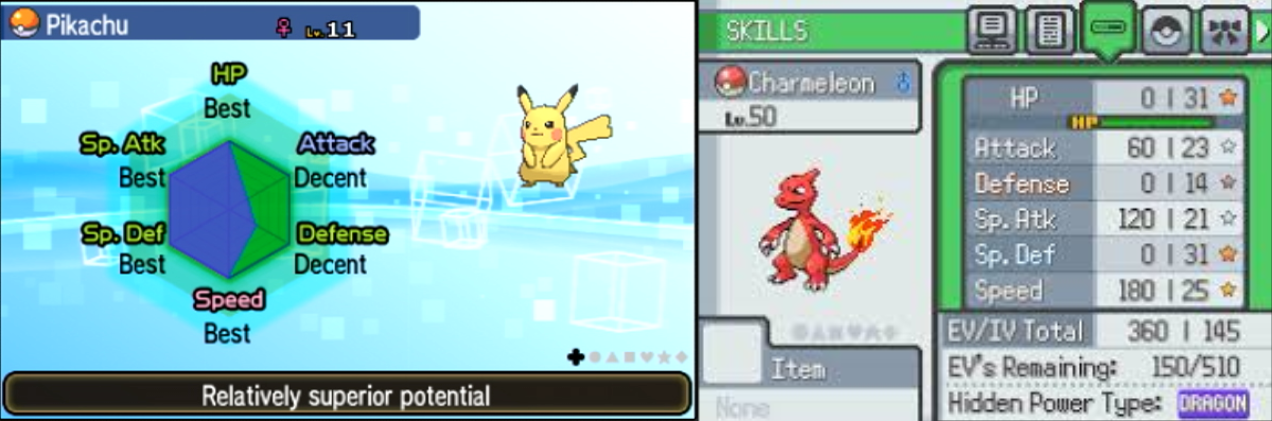
Stats you don’t need to know to hit “attack” over and over.
The realization that not all information has to be displayed, or is necessary to play your game is powerful. It can be very helpful in determining what information makes it to your core menus, and what information might be better suited in a diegetic menu.
We’ve talked about player mental loads before, but it’s also relevant here. You don’t want to scare away a new Pokémon player by giving them a ton of information that doesn’t normally impact play. You want to save that for the degenerates that grind for shines, and breed for perfect IVs and egg moves. So, move the menu. Make it a part of your world. Give it a chance to communicate why it’s cool, and give it a little showmanship.
In Pokémon Sun and Moon you can’t see information that affects a Pokémon’s stats right away. Once you’ve hatched twenty eggs, there’s a character you can talk to who will be impressed and give you access to the IV stats menu.

This character is called the “stats judge” and appears in many Pokémon games.
While this approach can be annoying to veteran players that already know the system and want to get to it quickly, this method of unlocking and interacting with the system does quite a few things. It removes complex information from your default menus, making learning a new system much easier for new players. It gives the player choice and makes the game feel reactive by only adding more menus if you show interest and follow through on the optional objectives. And it rewards the player and gives the menu some in-world weight by framing it as something only Ace Trainers can earn.
Pokémon has been able to pull off making games about statistics and probability feel simple. Not only that, they made their whole world better at the same time. If you want clear and simple menus, but don’t want to cut information, or have a system that needs special attention, try adding it to your world as a diegetic menu. You might just turn a button into a beloved nurse.
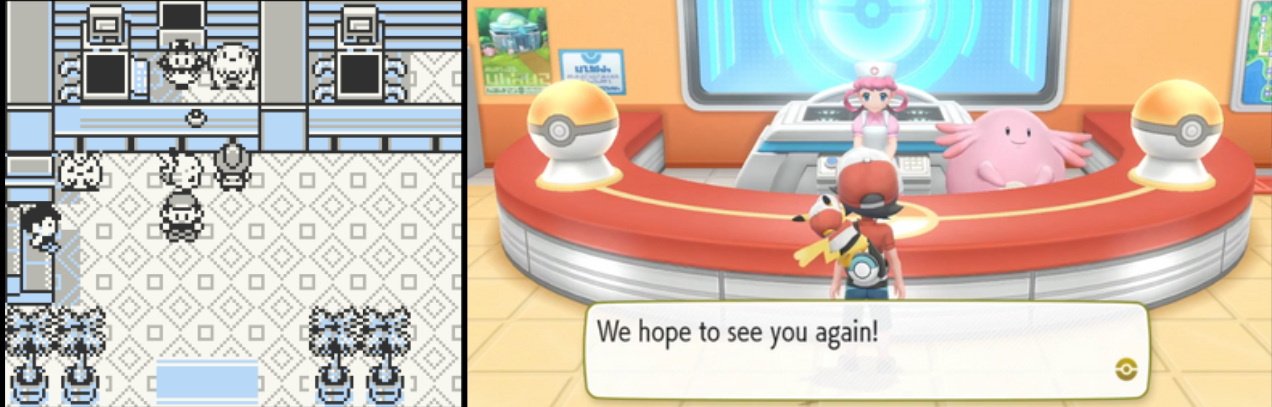
Nurse Joy
Consider becoming a patron for exclusive content and perks.
Or sign up for our substack