
Games Based on Movies Are Hard To Make
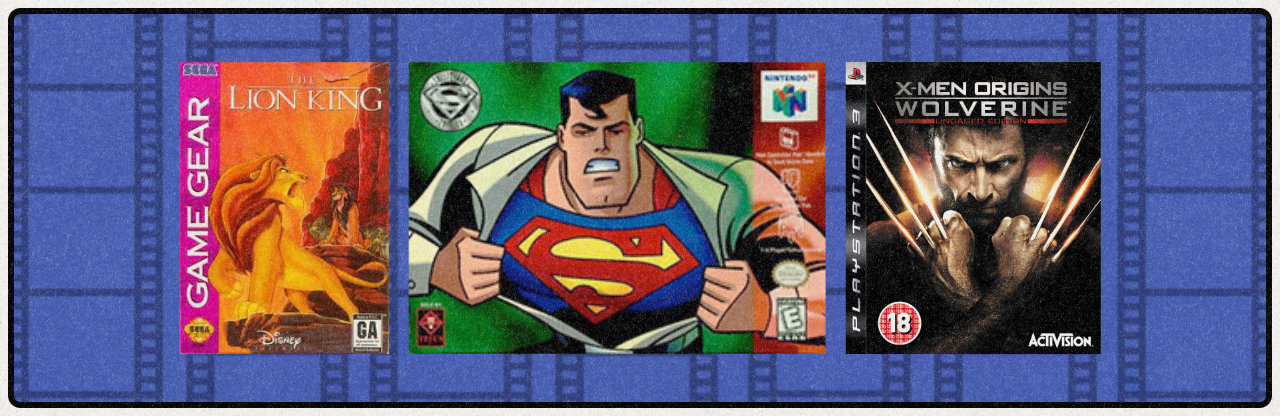
Games based on movies have a bad reputation. They’re usually making a lot of promises! You’ll get to explore a world you’re familiar with, see characters you love, and be a part of the story you already know! Unfortunately they often can’t live up to expectations. When you actually play the game… something feels off.
Making a game based on a movie is hard! We talked about our own experience working with established IPs in our podcast. A lot of things are outside the designers control and so many things can go wrong. There are a few main problems these games tend to struggle with, giving the whole sub-genera a bad rep.
Mechanics Don't Match the Theme
Whenever a team tries to adapt a movie into a game there’s a built-in conflict. A movie is trying to tell a story. A game needs to give you mechanics to play with. Anyone who’s familiar with “ludo-narrative dissonance” (and isn’t already rolling their eyes) knows this doesn’t automatically line up.
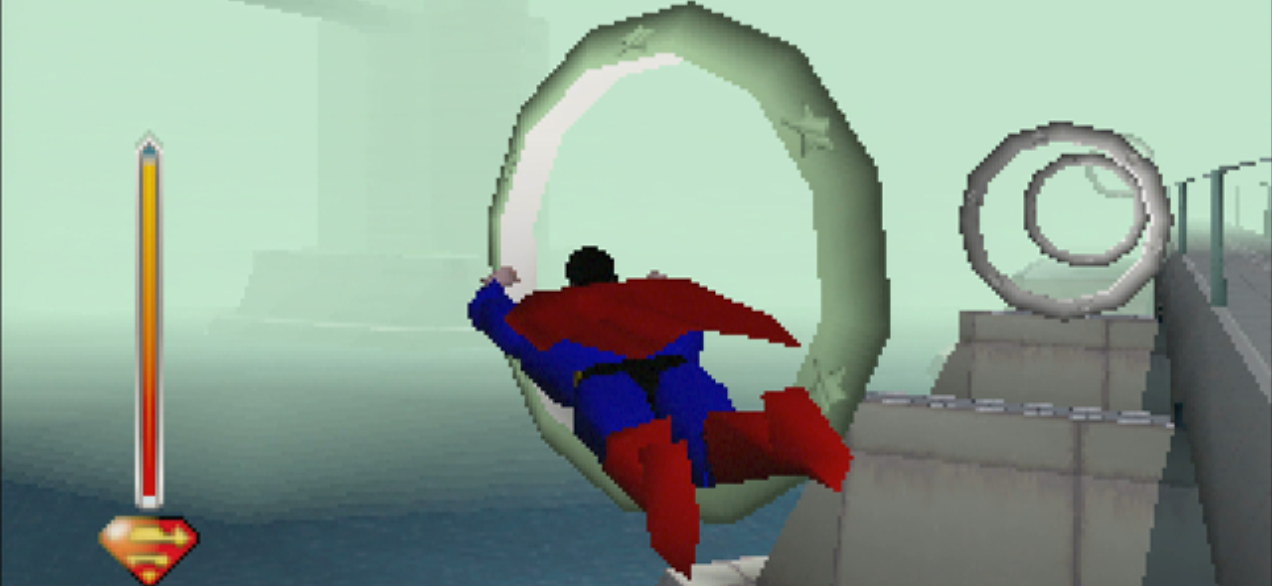
An example of a poor adaptation is Superman 64 which tried to adapt the Superman animated series (not a movie, yeah we know). As most reviews will attest, this game primarily failed because it didn’t have the mechanics to back up the fantasy of being Superman. Sure you could fly, but you couldn’t fly in a way that felt like Superman. You flew around to collect rings, you didn’t fly around to help people or fight bad guys. We’ll get to other reasons why Superman is hard to adapt later, but unfortunately this one didn’t even allow you to feel like Supes in his most basic form, let alone convey a story.
Aladdin on the Super Nintendo is a much better adaptation. But, while It is a great platformer, the movement and level structure could have been repurposed into almost any other early 90s Disney story. In fact some of the code WAS later used for other Disney games like The Lion King, and it stands to reason some of the design philosophies also migrated with it without much change. Aladdin and The Lion King were memorable because they were fun, not because they recreated the actual film fantasy.
When it gets down to it, being Superman is not really about being strong or being able to fly. Those are tools. The actual fantasy of Superman is about helping people, protecting people, and minimizing harm. His tension comes from who he can reach in time and how much damage he can prevent, not whether he can punch hard enough. There’s plenty of design space there, but for some reason we collectively haven’t explored it. Possibly because it’s easier to convey the relatively straightforward power fantasy and not the protection/strategy aspects (but that’s another blog post or podcast).
Player Expectations
The fantasy a film provides and the fantasy players expect to experience can be very different. Players assume the world exists beyond the edges of the frame, even when the movie never defines it. A movie shows only the parts the director wants you to see, but players assume the rest of the world exists. Maybe we can blame John Romero for this, who for DOOM insisted that if you can see it out of a window, players should be able to go to it. So, now, If a movie shows one street, players expect a full city. If the movie shows one corridor of a spaceship, players assume they can explore the entire ship. A movie gives you moments. A game has to turn those moments into systems. A film can linger on a five second establishing shot and it feels complete. A game has to build the places the player can reach.
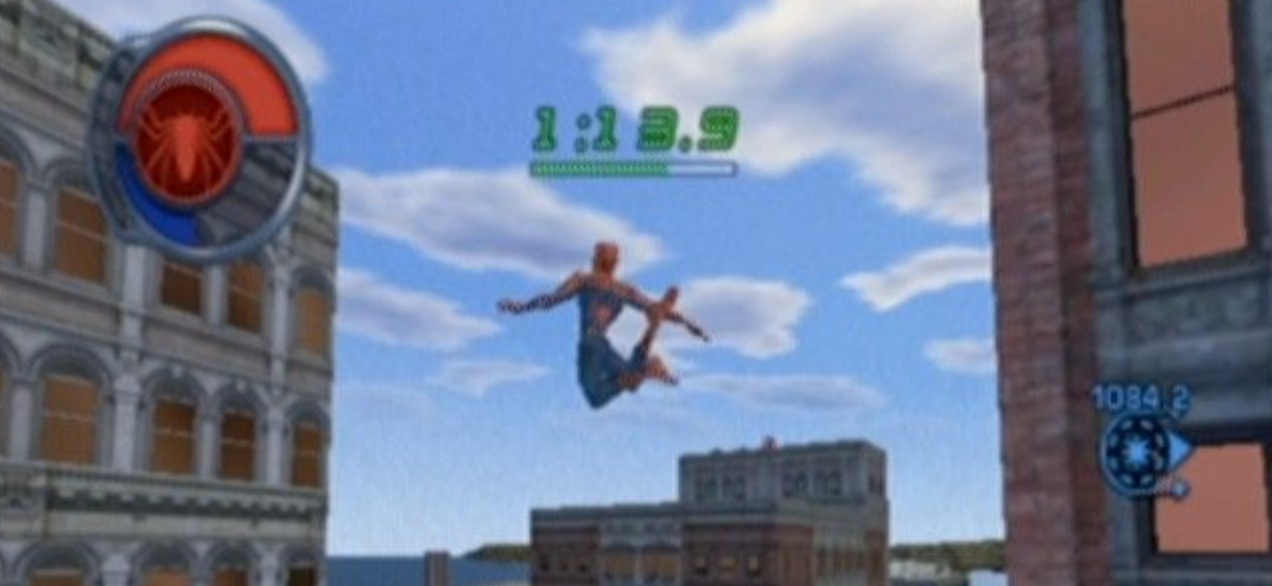
When they get it right these games can feel incredible. They truly feel like you’ve expanded and then entered the world of the movie. Just take a look at any Spider-Man game. Marvel’s Spider-Man 2 created an incredible map of New York, even if it’s not entirely accurate. And Spider-Man 2 (the other one from 2004) absolutely nailed the feeling of web-slinging across the city.
Player Expectations
Revisiting Superman, In Man of Steel, Superman and Zod fight across a city in a spectacular showdown. They fly at impossible speeds, smash through buildings, and cause massive destruction. It looks incredible, but the whole thing lasts only a few minutes, and the pacing was tightly controlled. Now, imagine if you had to watch that fight sequence on repeat. On the 4th or 5th viewing it would probably start losing some of its magic. While a movie can rely on spectacle to create emotion, a game should leverage its interaction instead. If we were tasked with making a game adaptation of this, we would have to turn the sequence into something the player does again and again. Big movie moments are not designed for repetition. Each subsequent viewing loses a bit of the magic. But once a spectacular moment becomes a system, the player will do it over and over and the impact of it will probably decrease each time.
Movies can also power scale on demand to create emotion. Games can’t do that without making players feel artificially restricted. Sure it’s fun playing as a fully formed Superman for a bit, but If you give players that level of power from the start, the game loses stakes. If nothing can hurt you, the tension disappears. If you can fly anywhere instantly, nothing feels dangerous. You could do the classic design of slowly unlocking those powers over the course of the game, but this doesn’t match the fantasy people want from Superman. Also, what do you do in the sequel? Take away the powers again? (champagne problem, we know)
Then there’s the player agency. The moment you give the player control, they also become the director. A movie’s tension comes from tightly controlled shots, fast cuts, and intentional escalation. A game hands the camera to the player. The rhythm becomes player-driven and It’s rarely as tight as a linear story. The player might stop, look around, backtrack, poke at objects, or simply explore. Outside of a David Lynch production, this is not the norm. A film can focus your attention exactly where it needs to go. A game has to hope you notice what matters.
Impacts on Production
Production timelines make all this even harder. Movies get rewritten, reshot, and reedited deep into development. Costumes change. Locations change. Entire third acts change. Arguably, a game can’t respond to those shifts as quickly as a movie can. It takes time to rebuild levels and mechanics. So the game team is often working with incomplete or outdated information. The film can fix things late with reshoots sometimes shooting entirely new scenes changing the story dramatically. However, because the underlying systems of your game limits the types of interactions you can support, last minute changes can be a lot harder to do.
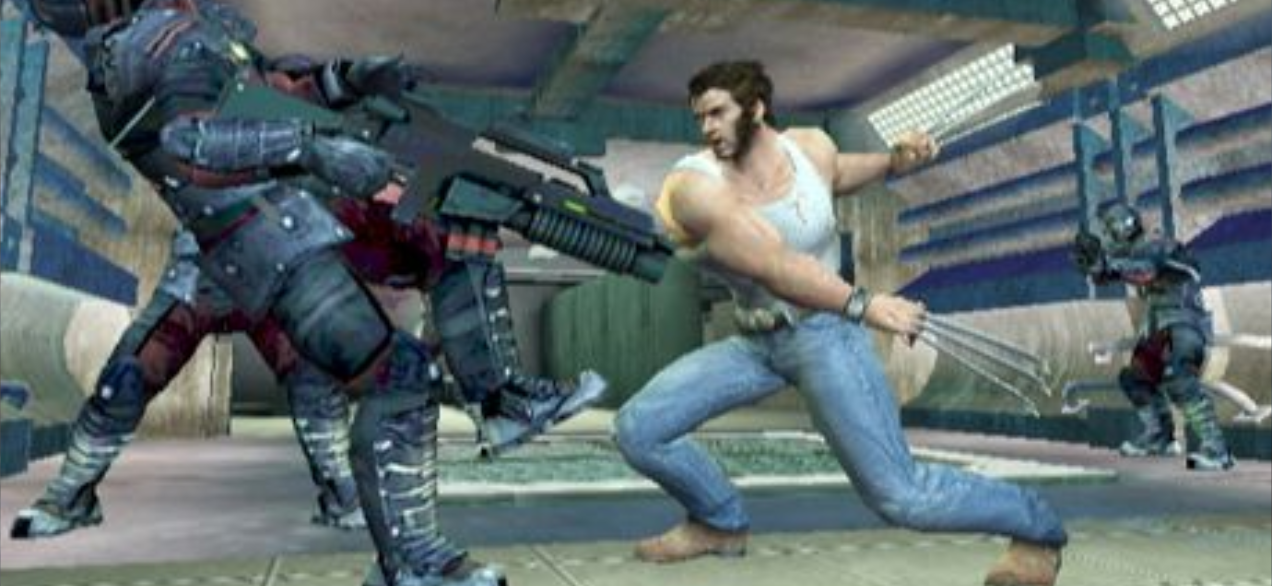
On our podcast we’ve mentioned how even with an animated property we didn’t get official assets and had to generate everything we needed ourselves. And because games didn’t lead the IP here, we had to respond to last minute script changes even if we were deep into Beta. This is common with games based on IP’s. If you ever play a game based on a movie and it has a different third act, this is probably why. Notably, Wolverine Origins by Raven also had this happen to them early in production. Raven was already developing a game based on Wolverine when the movie deal happened and then quickly pivoted to make their game match the upcoming movie. Then after all that, they had to delay their release for about a year when the movie was delayed.
It’s no wonder movie games are difficult to get right. They’re operating under different assumptions about pacing, stakes, control, and what the audience is allowed to do. All of this sets up why most movie games struggle. That doesn’t mean it’s not worth doing though! There are some fantastic games based on movies. Tell us your favorite in the comments!
Consider becoming a patron for exclusive content and perks.
Or sign up for our substack